



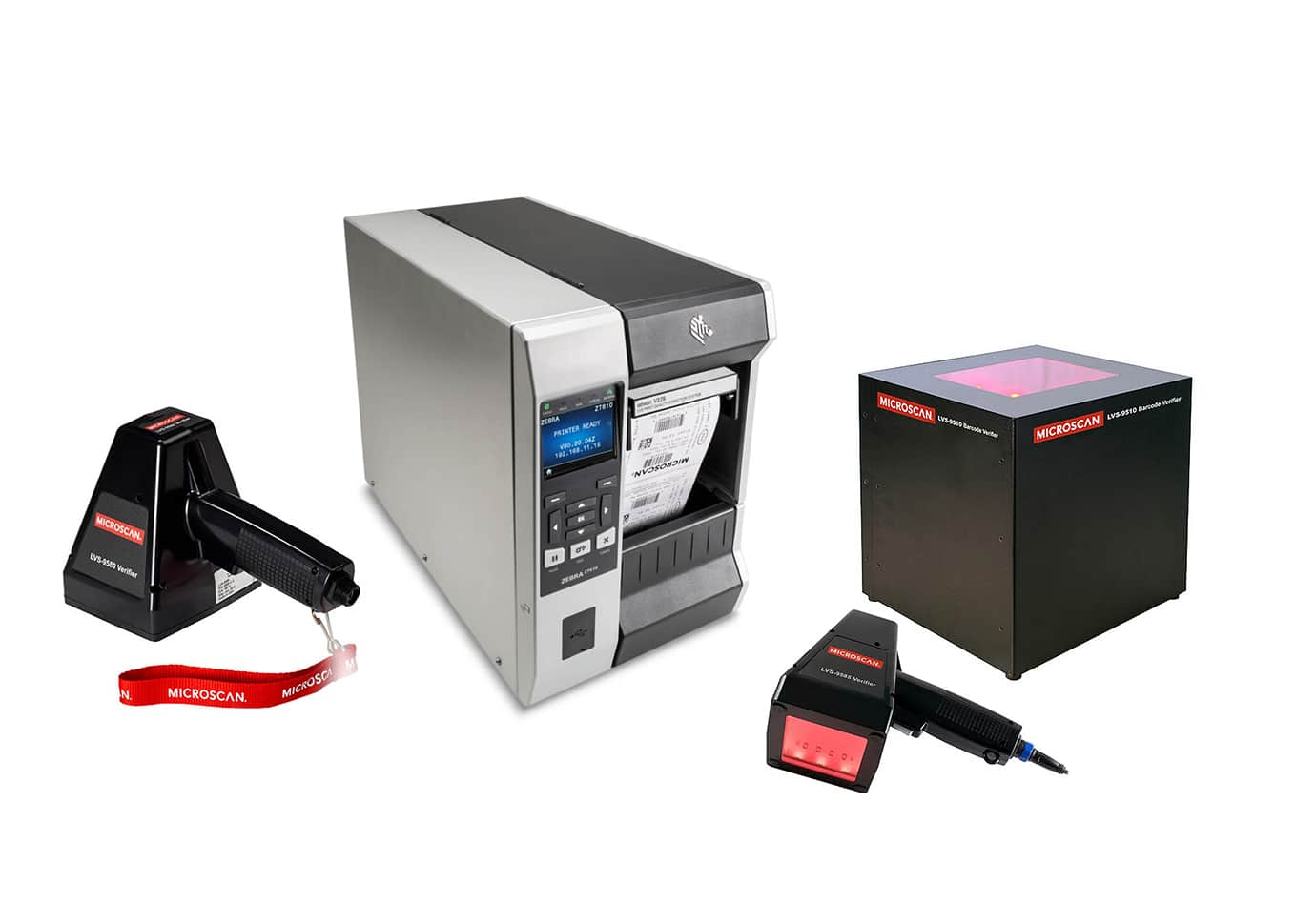
Omron (Microscan) barcode scanners: the right model for every application
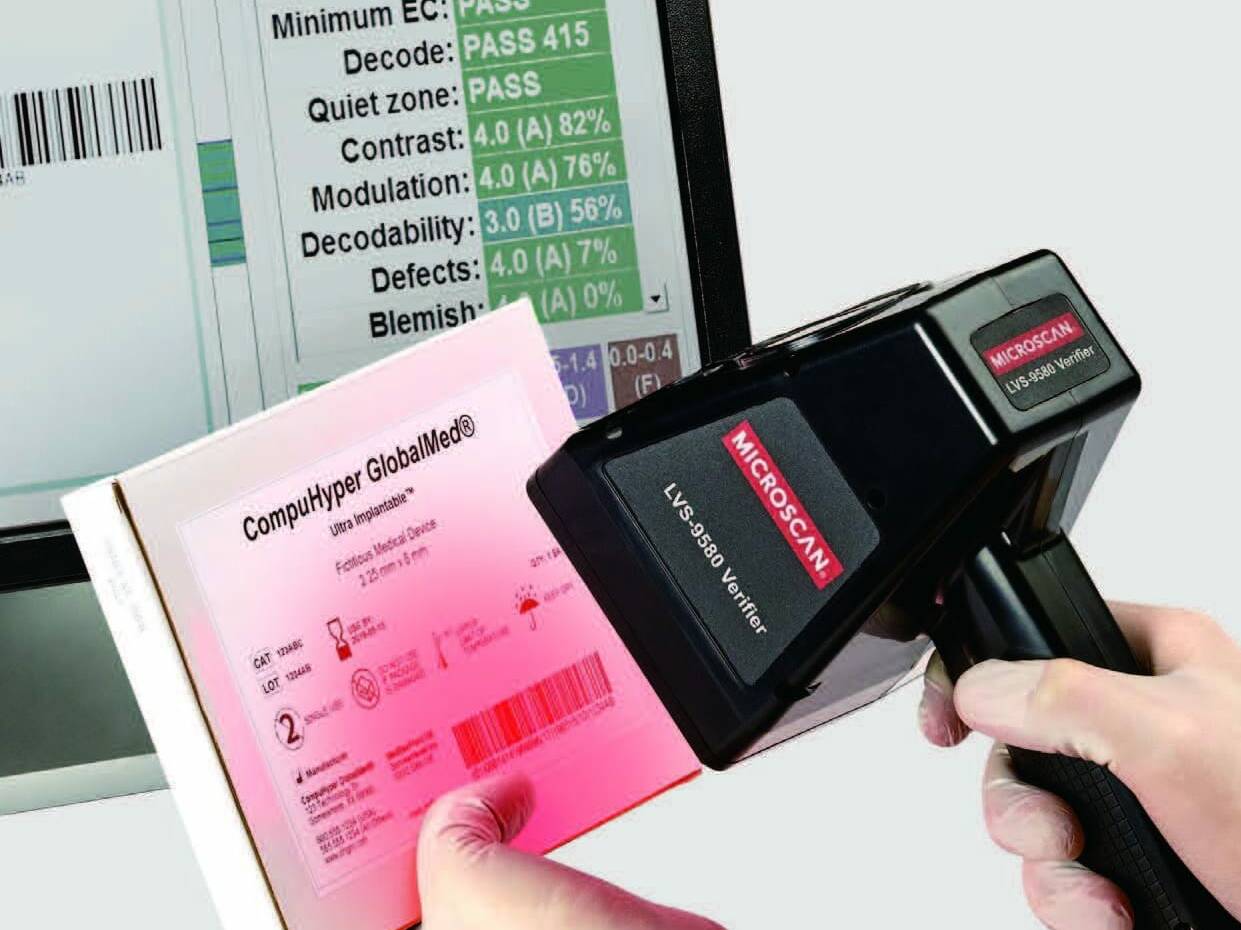
LVS-9580Portable printed barcode verifier(1D/2D)

A field format for carrying out checks wherever incidents occur(production/workshop/lab).
Ideal for: rapid checks, internal audits, quality standardization on several lines.
LVS-9585 Portable 1D/2D printed and engraved barcode verifier
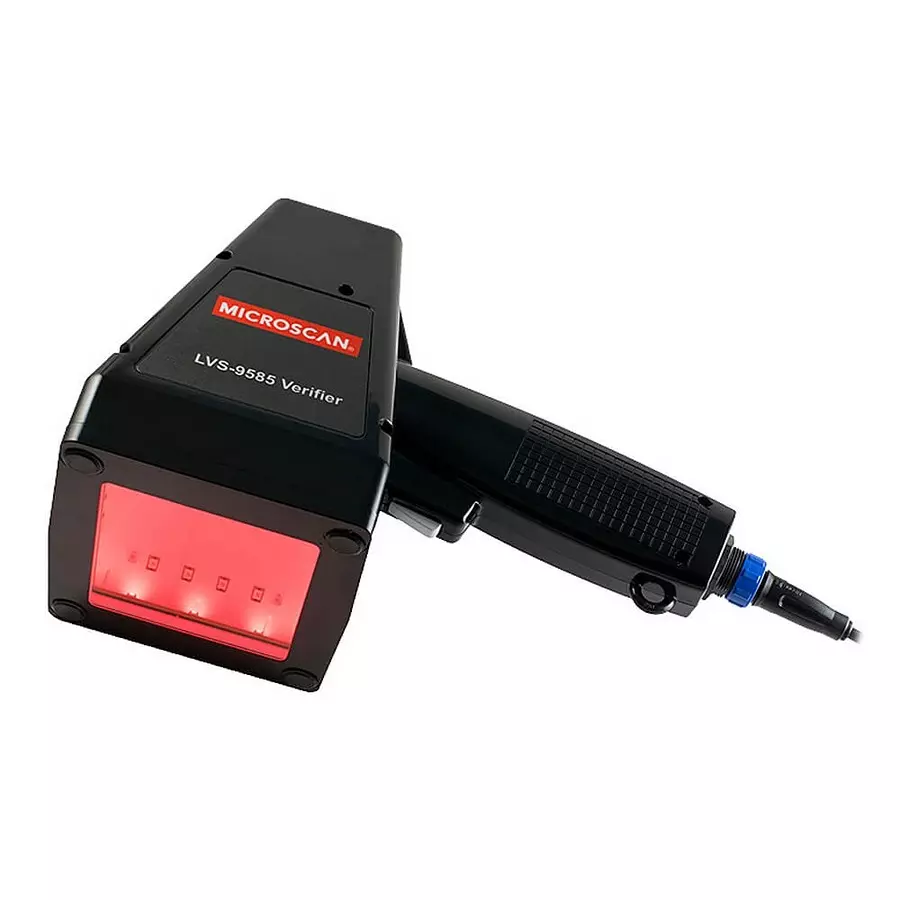
Designed for the constraints of engraved codes (DPM): metal, plastic, PCB, textured surfaces, low contrast, reflections…
Ideal for: qualifying an engraving process (laser, micro-percussion…) and making part-level traceability reliable.
LVS-9510 Desktop auditor (workshop / quality)

The reference choice for controlling the quality of 1D and 2D printed codes in a stable environment (quality, methods, printer settings, media validation).
Ideal for: validating a change of consumable, qualifying a new media, standardizing a quality level before dispatch.
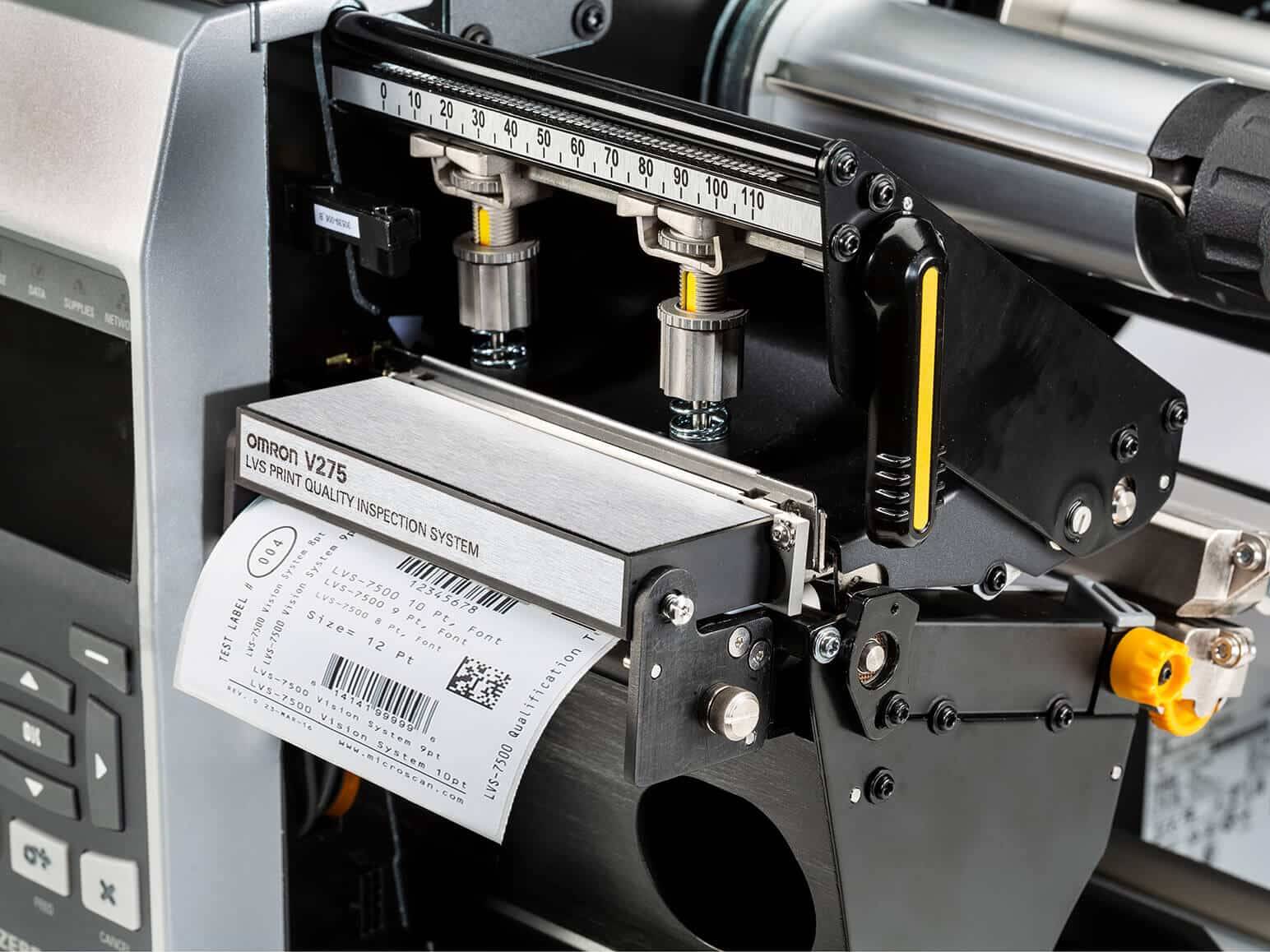
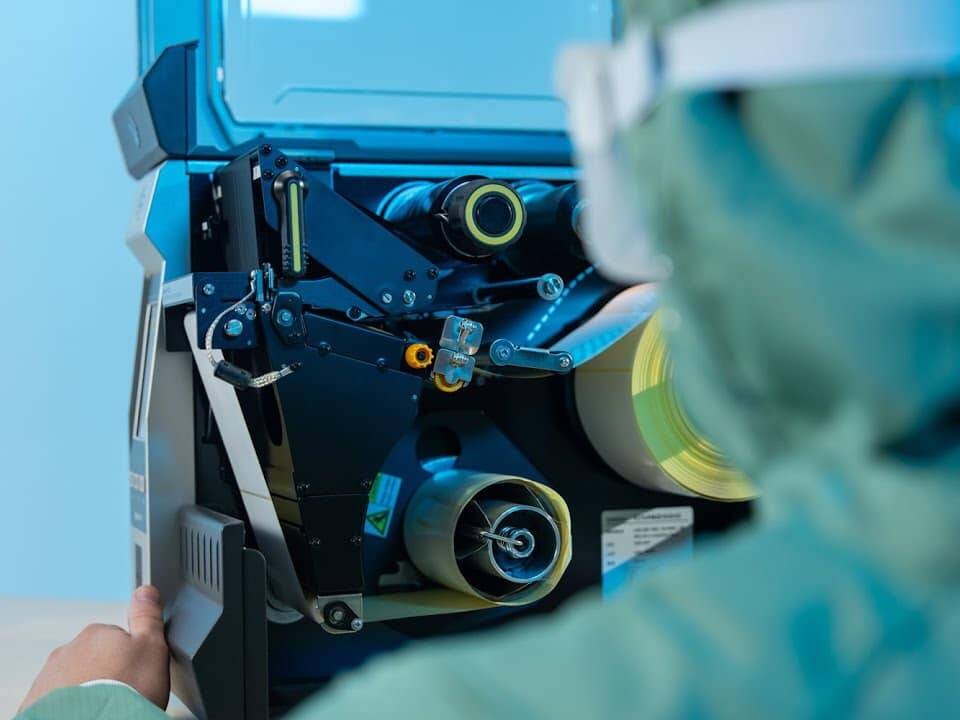
V275100% print quality inspection (print & inspect)

The “zero-defect label” solution: automatic, systematic control of every label (code quality, printing defects, data consistency).
Ideal for: regulatory requirements, high volumes, need for proof and audit trail, reduced returns/chargebacks.

Accessories & parts - reliable measurement and availability
Calibration cards, kits, integration elements and accessories: everything to guarantee reproducible results and continuity of service.
Talk to an expert: sizing, demo, compliance audit
Let’s discuss your needs
Intervention anywhere in France and Europe
Checking vs. reading: what you really buy
A reader validates “at time T”: it either reads or it doesn’t.
A verifier tells you why a code is good or bad, and above all whether it is robust (reading margins, contrast, modulation, raster defects, etc.). It’s the difference between “it works” and “it’s mastered”.
In concrete terms, an auditor helps you to :
- Reduce reading failures in logistics (picking, shipping, cross-docking)
- Reduce scrap / rework (reprints, rework, regravure)
- Reduce chargebacks (retail, transport, customs)
- Proving compliance (internal quality, audits, customer requirements, regulated sectors)
Two families of applications: printed codes and engraved codes (DPM)
Printed codes: product labels, UDI, shipping, cartons, pallets, internal traceability, etc.
Engraved codes / DPM (Direct Part Marking): direct marking on metal, plastic, PCBs, mechanical parts, components, etc. (laser, micro-percussion, chemical, etc.).
Tip: if you do DPM engraving, you need to choose a verifier capable of grading DPM quality according to the appropriate standards (ISO / DPM).
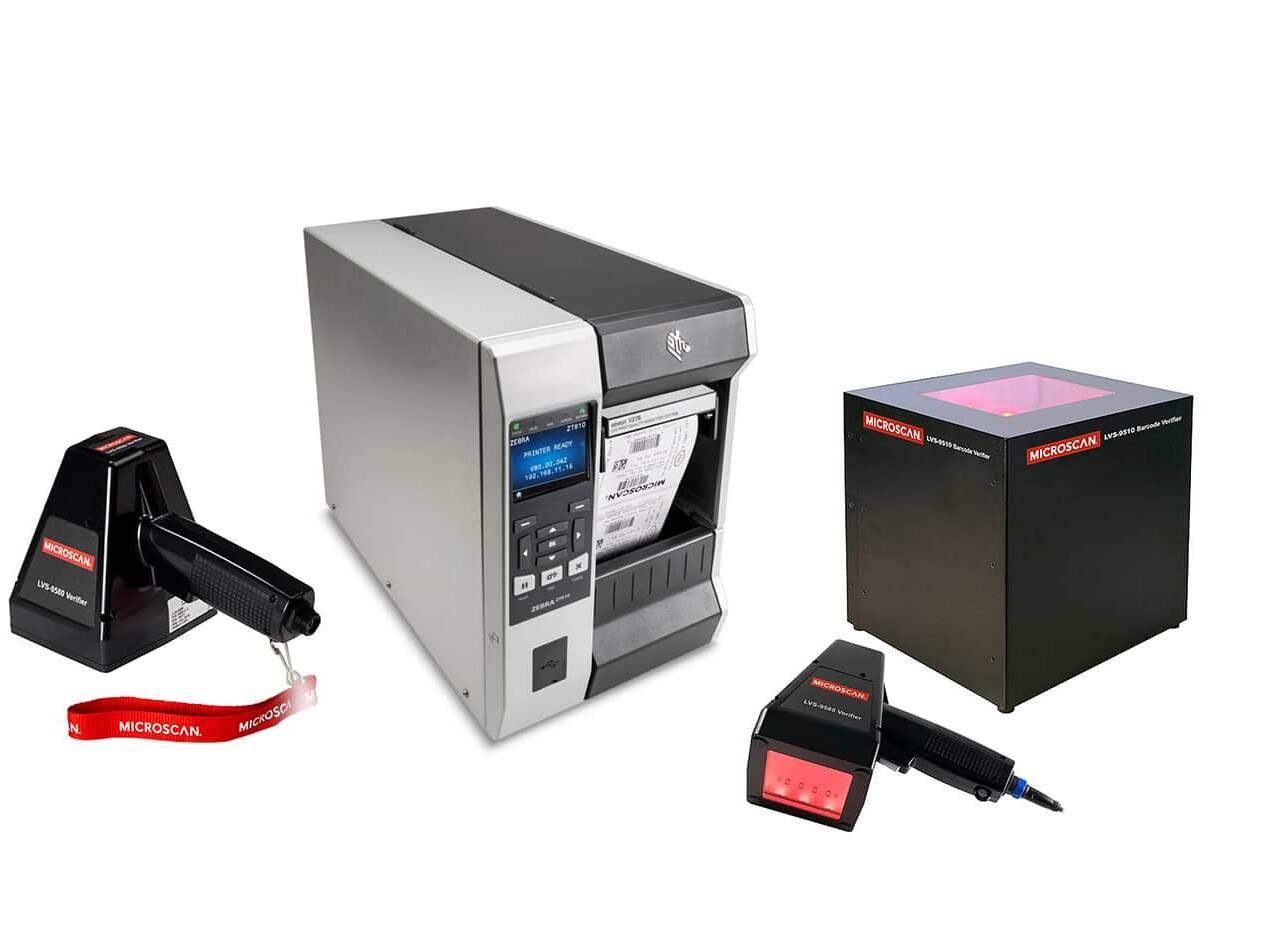
Omron range (Microscan) offered by CIPAM
To cover the majority of field scenarios, we rely on 4 complementary “building blocks”:
-
-
- Desktop (workshop/quality): off-line, stable, reproducible verification (e.g. receiving/quality control, printer adjustment).
- Portable (production/logistics): control close to lines and docks, multi-site, multi-line, rapid audits.
- Portable DPM: dedicated to the contrast/relief constraints of direct marking.
- In-line / printer-integrated (100% label inspection): automatic control without slowing down printing, with blocking/alerting actions.
-
Standards & compliance: your interoperable "quality assurance
Depending on your sector, the audit may be motivated by :
- Customer / supply chain requirements (readable codes everywhere, all the time)
- GS1 standards (data structure, identifiers, AIs, etc.)
- UDI requirements and regulated environments (traceability, control, proof)
Why CIPAM for recovery and continuity?
- Product & support continuity: same ranges, same field applications, same service requirements.
- Greater capacity: more experts to diagnose, integrate, maintain and train.
- Solution” approach: beyond the verifier, we handle the entire workflow: printing, applicators, reading, vision, traceability.
Take it a step further: CIPAM integration + custom dev
An auditor becomes truly powerful when connected:
- Automatic upload of reports to your QMS / EDM
- Creation of a “non-conformity” workflow (block, isolate, reprint, derogation)
- ERP/MES/WMS connection to associate code quality with a batch, series, OF or customer
This is where our custom dev team (operator interfaces, dashboards, connectors, automation) makes the difference: we turn quality control into an industrial process.

FAQ - Omron Barcode Verifiers (Microscan)
Frequently asked questions
A reader indicates whether a code is readable at time T (OK / KO reading). A barcode verifier measures code quality according to standards (ISO/IEC, ANSI), assigns a grade, identifies causes of defects (contrast, modulation, damage, etc.) and generates reports for traceability and audits.
Depending on the model, an Omron verifier (Microscan) checks 1D codes (Code 128, EAN/UPC, etc.) and 2D codes (DataMatrix, QR Code, etc.) on printed labels and/or engraved codes (DPM).
- Printed codes: product labels, shipping, cartons/pallets, UDI, internal traceability.
- Engraved codes / DPM (Direct Part Marking): direct marking on metal, plastic, PCB or mechanical parts (laser, micro-percussion, chemical).
For DPM, a DPM-compatible verifier is recommended to correctly assess quality on difficult surfaces (reflections, roughness, low contrast).
The ISO/IEC rating is a standardized assessment of code quality (reading robustness) based on several parameters (contrast, modulation, defects, etc.). It defines a reproducible acceptance threshold, useful for standardizing quality across lines, sites and suppliers.
On printed codes: insufficient contrast, overprinting, lack of ink, smudges, localized defects, setting drift, printhead wear, poor ribbon/ substrate combination.
On engraved codes (DPM): low contrast, marking too light or too deep, reflections, textured surface, curved areas, variability in engraving process.
Yes, because a code can pass through a tolerant reader and fail elsewhere (customer, dock, customs, service provider). Verification serves to prevent incidents by validating that the code is compliant and robust enough to be read under a variety of conditions.
- LVS-9510: desktop (workshop/quality) verifier for 1D/2D printed codes, ideal for media validation and adjustments.
- LVS-9580: portable verifier for field checks and audits on printed codes.
- LVS-9585: portable DPM verifier for engraved codes / direct marking on parts.
- V275 (VS121/VS122 series): 100% print quality inspection (print & inspect), to check each label automatically.
- 100% inspection checks each label as it leaves the printer: barcode quality, print defects, data consistency (depending on configuration), proof generation (reports/audit trail) and the possibility of triggering alerts or blocking. It’s ideal for environments with stringent quality and compliance requirements.
Yes, some verifiers can reconstitute a larger image and verify codes beyond the standard field (depending on model and configuration). This facilitates verification of large labels and codes.
Yes, verification systems are designed to provide compliance reports (timestamps, results, parameters), useful for quality monitoring, proof and internal or customer audits.
They are frequently found in logistics,industry, cosmetics,automotive, healthcare/medical devices,aeronautics,electronics,agri-food… wherever labels or markings are essential for traceability, shipping or compliance.
Accessories such as calibration cards, integration elements (cables, brackets) and maintenance kits ensure reproducible measurements and equipment availability, especially in multi-site deployments.
Yes, results (reports, status, alerts) can be used in a quality workflow: EDM archiving, non-conformity creation, batch blocking, quality release, and integration with ERP/MES/WMS depending on architecture and requirements.
The most effective approach is to start with actual samples (label, substrate, DPM marking), the target standard (ISO/IEC, GS1, UDI…), and field constraints (throughput, multi-site). A model is then recommended, and the parameters for quality thresholds are defined.