


Why protect a marking?
The causes of deterioration are rarely “theoretical”: they are linked to the terrain.
The most common factors:
- Abrasion / friction (conveyors, bins, pallets, picking, handling)
- Humidity, condensation, immersion
- Chemical products (solvents, oils, cleaners, disinfectants)
- UV and aging (storage, exposure, outdoor)
- Extreme temperatures (cold, heat, thermal cycles)
- Dust, particles, dirty environments
- Logistical constraints (wrapping, strapping, transport, shocks)
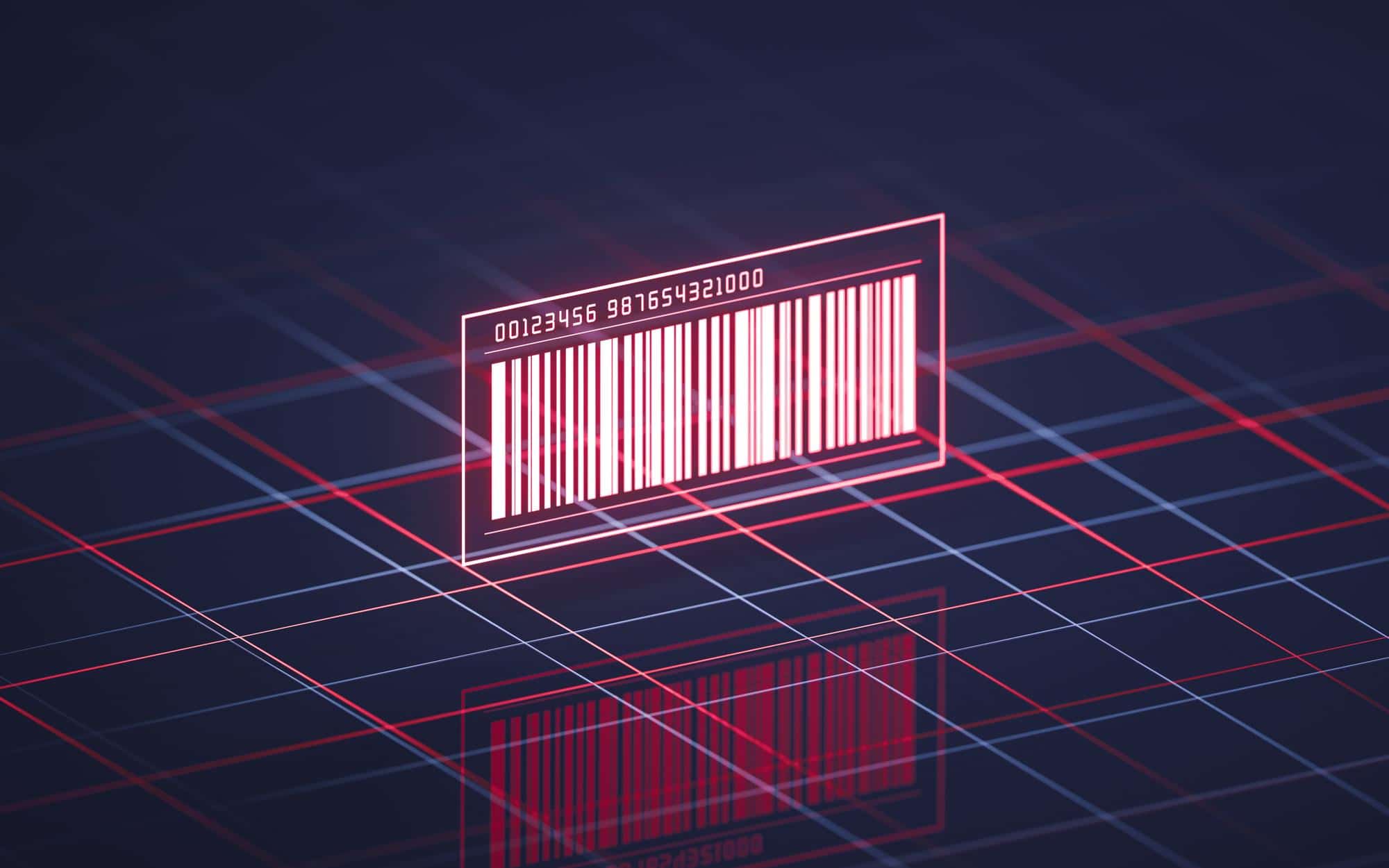
Objective: maintain symbol legibility and quality to avoid rescans, manual interventions and non-conformities – a subject directly linked to your approach to industrial traceability
Need to secure your markings?
CIPAM can help you qualify the best protection (backing, ribbon, lamination, varnish, DPM) and set up a reliable control system.
What you gain (and what you avoid)
Operational benefits
- First scan reading (fewer retakes, fewer disputes)
- Reduced labelling/marking scrap
- Standardization of consumables and processes (fewer uncertainties)
Quality & compliance benefits
- Compliance with traceability requirements (batch, series, date, UDI, etc.)
- Audit risk reduction (regulated sectors)
- Control print and engraving quality with objective measurement
Marking protection solutions (depending on your requirements)
There’s no such thing as “best” universal protection: there’s just the right combination for your application.
1) Protection of printed labels
- Lamination / overlamination (transparent protective film)
- Protective varnish (abrasion/product resistance)
- Choice of substrate (paper, synthetic, high-resistance)
- Adhesive selection (temperature, difficult surfaces, humidity)
- Suitable ribbons / inks (chemical, UV, heat resistance)
➡️ To find out more about choosing substrates and consumables : Industrial labels & consumables
2) Direct Part Marking (DPM ) protection
- Laser engraving/marking: optimizing contrast, depth, parameters
- Mechanical or chemical marking: selection of methods and associated controls
- Protection against dirt and wear, depending on environment
3) Process protection
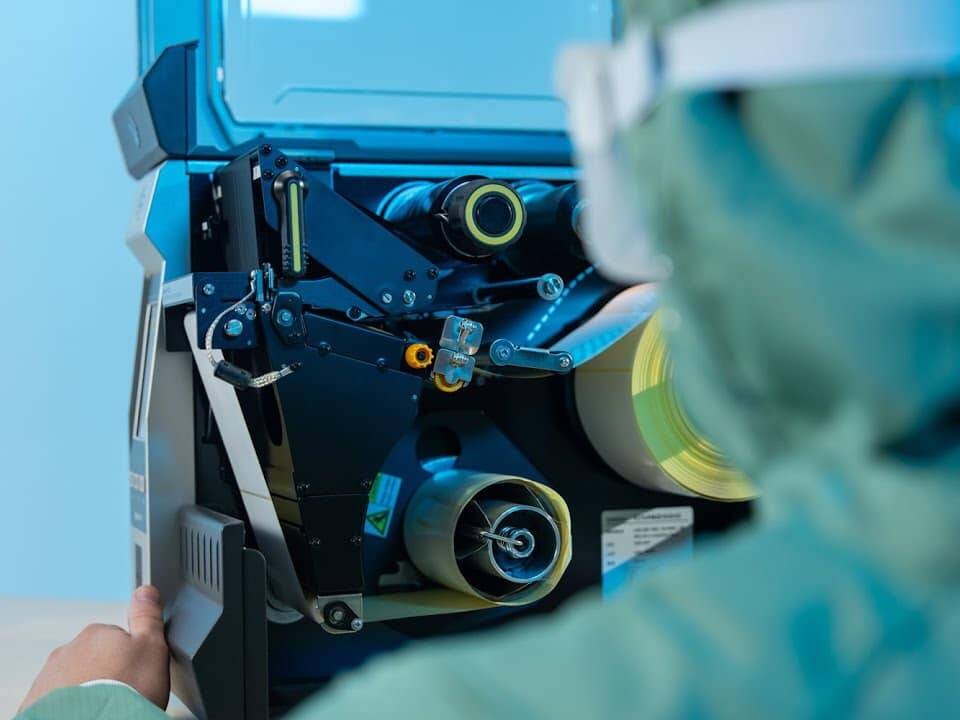
- Printer settings, pressure / speed / temperature control
- Validation in real-life conditions (samples, pilot series)
- Documentation and production standards (repeatability)
To structure these best practices at the IS/workshop level, you can link this approach to :
– Data acquisition
– Adding value to data
Checking quality: protection is not enough, you have to measure
Protecting is good. Proving is better.
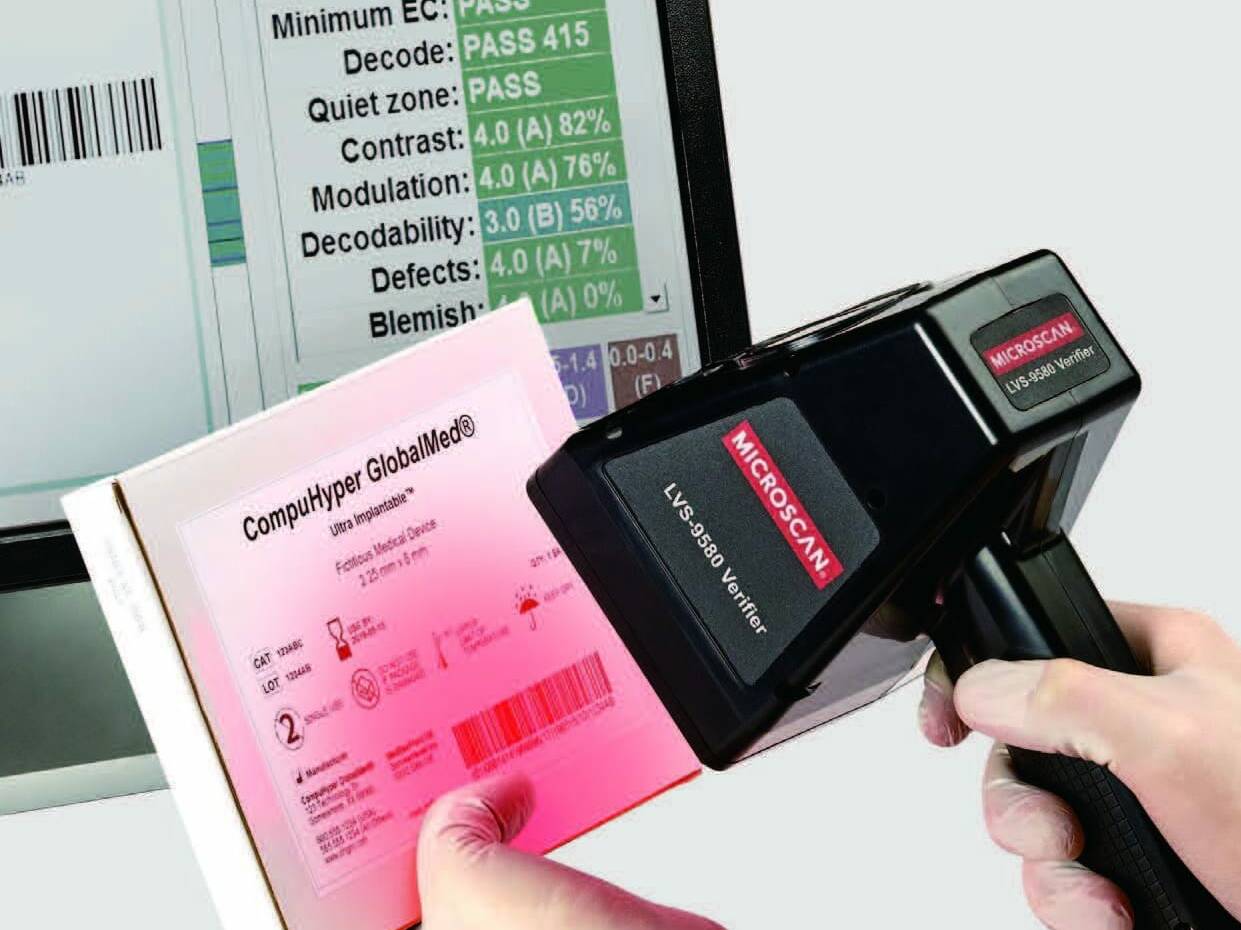
CIPAM incorporates a verification process to ensure that your codes remain legible and compliant:
- Verification of 1D / 2D barcodes (including DataMatrix / QR as required)
- Verification of printed and engraved markings
- Quality control according to standards (e.g. ISO/IEC, depending on symbology and context)
- Print drift detection (contrast, modulation, defects, distortion)
Result: objective criteria for qualifying a consumable, a machine setting or a supplier.
CIPAM offers solutions based on the Omron brand and other suppliers.
Typical use cases
- Industry & subcontracting: parts marking, identification labels, WIP traceability
- Logistics: package/pallet labels subject to friction, shrink-wrapping, humidity
- Health / pharma / medical devices: enhanced traceability and legibility requirements
- Rail / aeronautics: durability, environmental performance, long life cycle traceability
Agri-food: humidity, cold, cleaning, identification rate and robustness
FAQ - Marking and barcode protection
Frequently asked questions
No. Laminating is relevant in cases of abrasion, humidity, chemicals or long service life. Otherwise, a good support/ribbon combination may suffice.
Conformity is measured with a verifier (contrast, defects, modulation, etc.) according to defined standards and thresholds. Scanning is not a sufficient test.
Yes, even laser marking can become difficult to read (dirt, low contrast, wear). Verification validates actual quality.
Need to secure your markings?
CIPAM can help you qualify the best protection (substrate, ribbon, lamination, varnish, DPM) and set up a reliable control system.
Make an appointment with one of our marking experts by completing the form below.