



Asset tracking industriel : localiser et suivre vos actifs en temps réel

Additionnez, sur une année, les minutes que vos équipes passent à chercher un chariot, une servante, un équipement de test. Le total surprend toujours. C’est précisément ce que règle l’asset tracking industriel : savoir en permanence ce que vous possédez et où chaque actif se trouve.
Ce temps n’apparaît dans aucun tableau de bord, parce qu’il est diffus, réparti sur des centaines de petites recherches. C’est pourtant du temps payé et de la production ralentie. L’asset tracking transforme cette recherche en évidence : chaque actif dit où il est, en continu, sans qu’un opérateur ait à le pointer.
L’essentiel
- Trois questions, une seule solution. L’asset tracking répond à « qu’est-ce que je possède », « où est-ce » et « comment est-ce utilisé ».
- La technologie suit la précision utile. La RFID situe par zone, le RTLS donne une position continue au mètre ou au centimètre.
- On combine passif et actif sur un même site, zone par zone, plutôt que de tout couvrir avec la techno la plus chère.
- Le gain est double. Moins de temps perdu à chercher, moins de rachats de matériel déjà présent et la preuve d’où était un actif à un instant donné.
Suivre un actif, ce n’est pas l’inventorier
Savoir qu’on possède un équipement ne dit pas où il se trouve maintenant. Un inventaire est une photo à un instant donné. Le suivi d’actifs, lui, est un film.
La donnée qui change tout est la troisième : le taux d’utilisation réel. C’est elle qui révèle le matériel dormant, celui qu’on croit manquant et qu’on rachète alors qu’il dort dans une autre zone. Une fois qu’on voit ce que l’on possède vraiment et comment il circule, on cesse d’acheter en double et on dimensionne le parc au plus juste.
Le coût invisible de la recherche
Un opérateur qui cherche un chariot élévateur ne produit pas. Un technicien qui attend un équipement de test partagé prend du retard sur son intervention. Un accessoire de levage introuvable, c’est parfois une opération repoussée faute de matériel conforme sous la main.
Ces pertes sont indolores prises une à une. Cumulées sur un parc de plusieurs centaines d’actifs et sur une année, elles pèsent lourd. L’asset tracking ne supprime pas le travail, il supprime l’attente et l’incertitude qui l’entourent.
Choisir la technologie selon la précision utile
Il n’existe pas de meilleure technologie de localisation dans l’absolu. Il existe celle qui correspond à la précision dont vous avez réellement besoin, au bon coût. C’est le cœur d’un projet d’asset tracking réussi. C’est ce que nous détaillons dans notre comparatif RTLS ou RFID.
RFID UHF : la zone et le passage
La RFID passive en UHF ne demande ni batterie ni maintenance sur le tag. Elle dit dans quelle zone se trouve un actif et enregistre ses passages à des points de lecture : une porte, une allée, une colonne de rangement. Pour beaucoup de parcs, savoir « l’actif est dans la zone C » suffit largement et c’est la solution la plus économique.
RTLS UWB : la position au centimètre
Quand il faut retrouver un objet précis dans un grand atelier, on passe au RTLS en UWB, qui localise à quelques dizaines de centimètres près. Le tag est actif et alimenté par une pile ; il communique avec des ancres fixes. On réserve cette précision aux zones qui la justifient, car elle coûte plus cher à déployer.
BLE, Wifi et LoRa : couvrir large ou aller dehors
Le BLE couvre de vastes surfaces à moindre coût quand une précision au mètre suffit. Le Wifi s’appuie sur une infrastructure souvent déjà en place. Pour de grands sites extérieurs ou du semi-remorque à suivre entre plusieurs établissements, le LoRa et le GPS prennent le relais. Là encore, le bon choix dépend de la distance, de l’intérieur ou de l’extérieur et de la précision attendue.
Passif ou actif : la vraie question de coût
Un tag passif est peu coûteux, sans pile, quasi éternel, mais il faut le lire à un point de passage. Un tag actif émet en continu et se localise en temps réel, au prix d’une batterie à surveiller et d’un coût unitaire plus élevé. Sur un même site, on mélange les deux : passif sur les milliers d’outils et de contenants, actif sur les quelques dizaines d’actifs mobiles critiques.
La carte temps réel : voir son parc d’un coup d’œil
La localisation n’a de valeur que si elle se lit d’un regard. L’applicatif métier affiche vos actifs sur un plan du site, avec leur statut : disponible, en cours d’utilisation, en maintenance, sorti de zone.
On y ajoute des règles simples et utiles. Une alerte quand un actif franchit une frontière qu’il ne devrait pas franchir. Un signalement quand un équipement soumis à contrôle approche de son échéance. Un historique complet des mouvements, exportable, qui répond en quelques secondes à la question « où était cet actif tel jour ». La donnée brute de localisation devient une décision.
La solution CIPAM
Un suivi d’actifs conçu pour votre site, pas un produit sur étagère
CIPAM combine identification et localisation, dimensionnées zone par zone. Depuis plus de 30 ans, nous intégrons le matériel, le logiciel métier et l’interfaçage à votre système d’information, du cadrage au déploiement sur site.
- Étiquettes et tags RFID, passifs ou on-metal, selon l’actif : voir notre gamme d’étiquettes et tags RFID.
- Balises RTLS actives (UWB, BLE) pour les actifs mobiles critiques à localiser en continu.
- Lecteurs, antennes et points de lecture aux passages clés : voir nos lecteurs et antennes et nos terminaux mobiles.
- Chariots et engins connectés pour tracer les mouvements logistiques : voir le chariot élévateur connecté.
- Applicatif métier avec carte temps réel : statuts, alertes de sortie de zone, échéances de contrôle, historique et exports.
- Intégration ERP, GMAO et MES pour que la localisation serve la maintenance et la gestion de parc, pas seulement l’affichage.
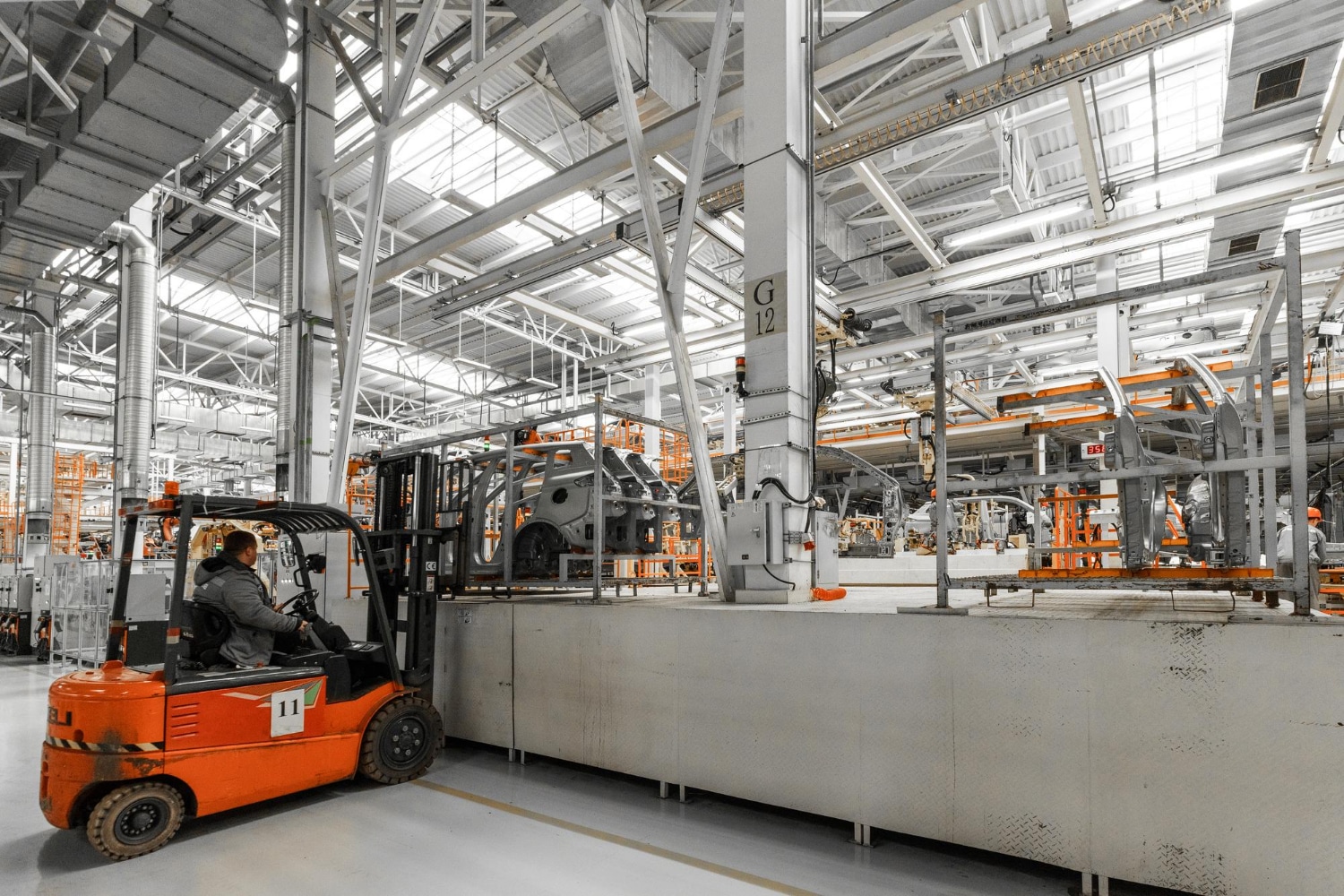
Cas concret : suivre les accessoires de levage et les chariots d’un site industriel
Le contexte
Un site industriel de fabrication d’équipements lourds gère un parc d’accessoires de levage (élingues, manilles), de chariots et de caisses réparti sur plusieurs zones et colonnes de rangement. Retrouver le bon accessoire, vérifier qu’il est bien rentré et savoir lequel est disponible reposait sur la mémoire des équipes et sur des vérifications manuelles chronophages.
Ce que CIPAM a conçu
Identification des accessoires et des contenants par tags RFID adaptés au métal et installation de points de lecture RFID sur les colonnes de rangement et les zones de passage, en haut comme en bas de site. Chaque présence et chaque mouvement remontent en temps réel vers un applicatif en cloud, sans installation sur les serveurs du client. L’architecture permet d’ajouter de nouveaux points de lecture au fil des besoins.
Ce que ça change
Les équipes voient l’état du parc en direct, distinguent un accessoire réellement absent d’un accessoire simplement rangé ailleurs et retrouvent immédiatement la disponibilité d’un équipement. La vérification cesse d’être une corvée pour devenir une lecture d’écran.
Ce que vous y gagnez
Moins de temps perdu à chercher, d’abord. Moins de rachats inutiles, ensuite, parce qu’on cesse de commander ce que l’on possède déjà. Une meilleure disponibilité du matériel critique, enfin, parce qu’on sait où il est et s’il est libre.
Sur les parcs soumis à des contrôles réglementaires, l’asset tracking apporte en prime la traçabilité des mouvements et des contrôles. C’est exactement ce qui sécurise le suivi d’outillage et la prévention du FOD en aéronautique, où prouver la localisation d’un outil est une exigence, pas un confort.
Réussir son projet d’asset tracking : la méthode
Un projet d’asset tracking ne commence pas par un choix de technologie. Il commence par une question : quelle décision voulez-vous prendre grâce à la localisation ?
Lister les actifs qui comptent. Rarement tout le parc, souvent les plus mobiles et les plus critiques. Définir la précision utile, zone par zone. Une allée entière suffit ici, le centimètre s’impose là. Choisir passif ou actif en conséquence, pour ne payer la précision que là où elle sert. Poser les points de lecture aux passages naturels, sans alourdir le travail. Relier à votre système d’information pour que la donnée nourrisse la maintenance et la gestion de parc. Puis valider sur un périmètre pilote avant d’étendre.
Questions fréquentes
Quelle différence entre RFID et RTLS pour l’asset tracking ?
La RFID localise par zone, au passage à un point de lecture. Le RTLS, en UWB ou BLE, donne une position continue en temps réel. On combine souvent les deux sur un même site, selon la précision utile par zone.
L’UWB est-il obligatoire ?
Non. L’UWB apporte une précision au centimètre mais coûte plus cher à déployer. Si une localisation par zone suffit, la RFID passive est nettement plus économique.
Peut-on suivre des actifs en extérieur ?
Oui. En extérieur ou entre plusieurs sites, on s’appuie sur le GPS et le LoRa plutôt que sur l’UWB. Le choix dépend de la surface à couvrir et de la précision recherchée.
Combien de temps tient une balise active ?
Cela dépend de la fréquence d’émission et du modèle. On dimensionne la cadence de mise à jour en fonction du besoin réel, car c’est elle qui détermine l’autonomie. Un actif qu’on suit à la minute et un actif qu’on suit à la seconde n’ont pas la même durée de vie de pile.
Peut-on relier le suivi à un ERP ou une GMAO ?
Oui. Les mouvements et statuts d’actifs peuvent alimenter votre ERP, votre GMAO ou votre MES, pour rattacher la localisation aux ordres de travail, à la maintenance et à la gestion des immobilisations.
Peut-on suivre aussi les personnes ?
Oui, avec des badges. C’est le même socle technologique que pour la localisation du personnel en zone sensible ou ATEX.
Par où commencer ?
Par une zone et une famille d’actifs critiques. On prouve la valeur sur un périmètre restreint, puis on étend. Nous cadrons ce périmètre avec vous.
Rendre chaque actif localisable
On part de votre parc réel et de vos zones, pas d’un catalogue. Décrivez-nous votre besoin, nous vous proposons un premier périmètre pilote.
Parlons de vos actifsComparer RTLS et RFID
À lire aussi : la géolocalisation d’actifs industriels, le suivi d’outillage RFID et le glossaire de la traçabilité.
Arrêtez de chercher vos actifs
Décrivez-nous votre parc et vos zones critiques. Nous dimensionnons le suivi adapté.
hbspt.forms.create({portalId:”142268676″,formId:”7703be11-c760-4836-8c4a-54cd680a95ca”,region:”eu1″});